Why Your AC Isn’t Cooling: Common Causes & Quick Fixes
Is your air conditioner blowing warm air on a scorching day? You’re not alone. Few things are more frustrating than an AC that won’t cool when you need it most. At Hug’s H.V.A.C, we know how urgent it feels—especially when the heat just won’t quit.
You want answers. Fast. And you want to know what you can actually fix yourself, and when it’s time to call in a pro. We’re here to help you get cool again, with clear steps for troubleshooting, safety, and peace of mind.
Why Isn’t My AC Cooling? The Most Common Culprits
Air conditioning can be like a relay race—if even one runner drops the baton, the whole system slows down. Here are the top reasons your AC might not be cooling, what you can check, and what you might be able to fix yourself.
1. Dirty Air Filter: The Invisible Blocker
Think of your AC’s air filter like your home’s lungs. When it’s clogged, the whole system struggles to breathe. Dust and pet hair can turn it into a wall, blocking airflow and making your AC work overtime—often with barely any cool air to show for it.
What to Check:
- Find the return vent or filter slot (usually near your thermostat or inside the furnace/air handler).
- Slide the filter out. Hold it up to a light. If you can’t see light through it, it’s overdue for a change.
Quick Fix:
Swap in a new filter (the right size and MERV rating for your system). Most homeowners can do this in under five minutes. Mark your calendar to check monthly during heavy use.
Urgency:
Non-urgent, unless the system has already shut down due to overheating or icing.
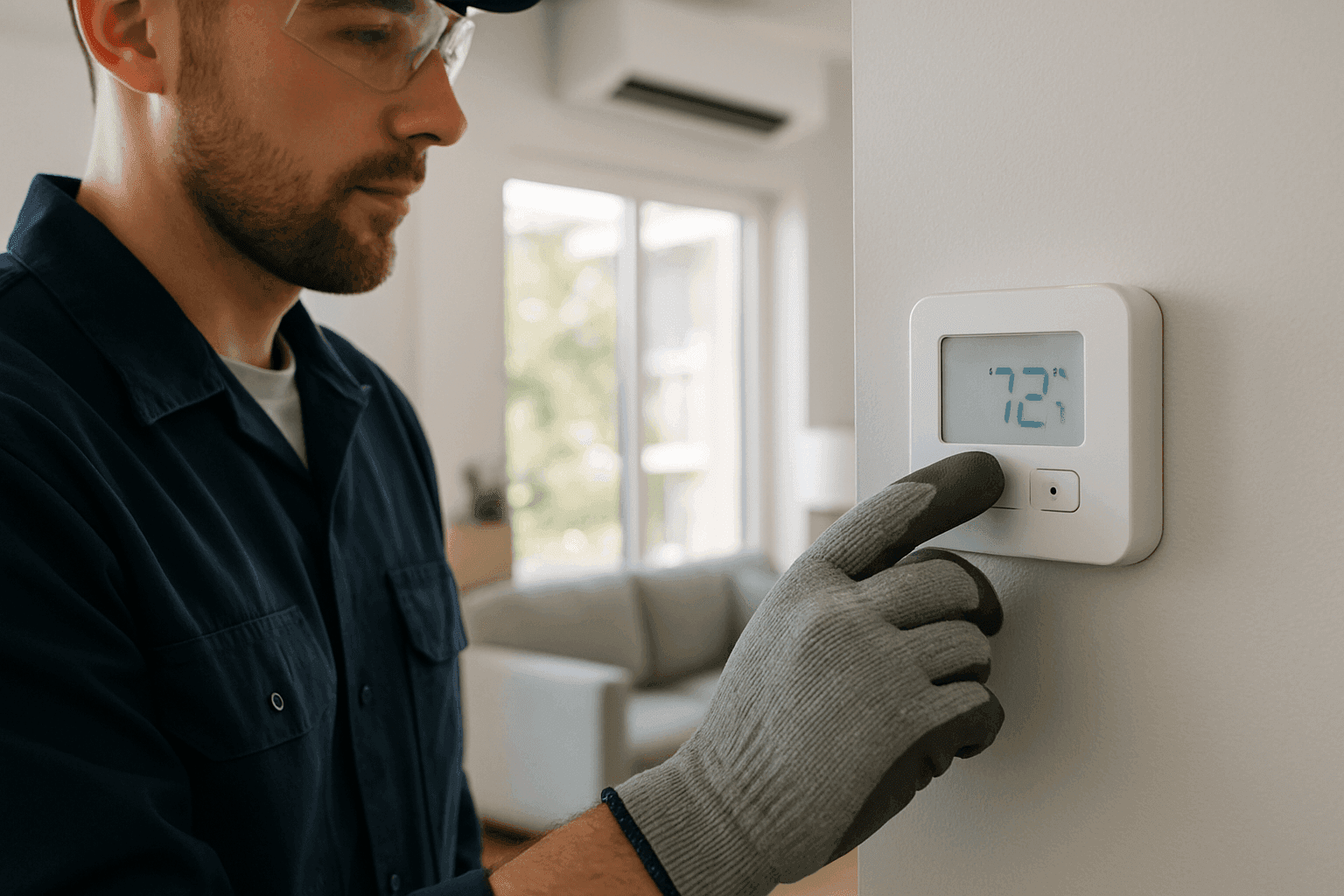
2. Thermostat Mistakes: The Tiny Brain That Causes Big Problems
A thermostat can be as fussy as a cat. If it’s set wrong, bumped, or has dead batteries, your AC might be getting mixed signals—or none at all.
What to Check:
- Is the display on?
- Is it set to “cool” and below the current room temperature?
- Batteries fresh? (If it takes them.)
Quick Fix:
Reset the thermostat. Double-check settings. Replace batteries. Make sure it’s not in “fan-only” or “heat” by accident.
Urgency:
Non-urgent, unless the display is blank after new batteries or settings are correct but nothing happens.
3. Refrigerant Leaks: The Lifeblood That Disappears
Refrigerant is what actually cools the air. If there’s a leak, your AC is like a fridge trying to work with the door open: always running, never getting cold.
Signs of Trouble:
- Hissing sound near copper lines or outdoor unit
- Ice on the refrigerant lines or evaporator coil
- AC runs nonstop but blows warm air
Homeowner Steps:
No safe DIY fix here. Refrigerant systems are pressurized and require EPA-certified handling. But you can:
- Turn off the system at the thermostat to prevent further damage
- Note any noises or visible ice for your technician
Urgency:
Urgent. Call an emergency HVAC tech, especially if ice is present or you hear hissing.
4. Frozen Evaporator Coil: The AC’s “Frosted Donut” Problem
When airflow is blocked (dirty filter, closed vents) or refrigerant is low, your coil can freeze. That sheet of ice turns your AC into a paperweight.
What to Check:
- Open the access panel on the indoor unit (if you’re comfortable).
- Look for frost or ice on the coil or copper pipes.
Quick Fix:
- Turn off the AC but keep the fan “on” to help thaw the ice.
- Replace the filter if dirty.
- Make sure supply and return vents are open and unblocked.
Urgency:
Semi-urgent. If ice keeps returning, call a pro. Repeated freezing can damage the compressor—a pricey fix.
5. Electrical or Breaker Issues: The Silent Saboteur
Sometimes, the fix is as simple as flipping a switch. Power surges, storms, or faulty wiring can trip your breaker or blow a fuse.
What to Check:
- Go to your electrical panel. Is the breaker for the AC tripped?
- Check the “disconnect” box near your outdoor unit (for blown fuses).
Quick Fix:
- Reset the breaker. If it trips again, don’t force it—this means there’s a deeper issue.
- Never bypass or replace fuses with incorrect types.
Urgency:
Urgent if breaker keeps tripping or you smell burning. Electrical issues can be a fire hazard.
Quick Safety Checklist ⚡️
Before you do anything, be sure you’re safe. Here’s what to keep in mind:
- Turn off power at the thermostat and breaker before inspecting any equipment.
- Never handle refrigerant or open sealed HVAC components.
- Don’t poke around if you hear buzzing, see sparks, or smell burning—call for emergency HVAC help.
- If water is pooling around the unit, watch for mold growth or electrical shorts.
- Wear gloves and a mask when handling dirty filters or ductwork (allergens and dust).
Refer to the U.S. Consumer Product Safety Commission and local electrical codes for home safety guidelines.
DIY vs. Call a Pro: Where’s the Line?
DIY Fixes:
- Change dirty filters
- Reset tripped breakers (once)
- Replace thermostat batteries
- Clear debris from outdoor unit (leaves, sticks)
Call Hug’s H.V.A.C for:
- Refrigerant issues or leaks
- Frozen coils that keep coming back
- Electrical or wiring problems
- Major component failures (compressor, fan motor, control board)
- Odd noises, burning smells, or total system shutdown
If you’re ever unsure, it’s safer—and usually cheaper long-term—to let a licensed technician take a look.
What Happens When a Pro Arrives?
When you call Hug’s H.V.A.C for 24/7 emergency HVAC service, expect a clear, step-by-step approach:
- Assessment
We’ll ask questions about what happened, when, and what you’ve already tried. - Visual & Hands-On Inspection
We check filters, thermostats, wiring, coils, refrigerant level, control boards, and airflow. - Diagnosis with Tools
Using digital gauges, thermometers, and electrical testers, we pinpoint the problem. - Code & Safety Compliance
Repairs are made to meet local building codes and manufacturer requirements. - Clear Next Steps
We’ll explain what’s needed, estimated time, and answer your questions before any work begins.
Prevention & Maintenance: Keep Your Cool All Season
Regular maintenance is like brushing your teeth. Skip it, and you’re headed for trouble. Here’s how to keep your AC humming:
- Change filters monthly or as recommended by the manufacturer.
- Schedule professional HVAC maintenance in spring and fall.
- Keep outdoor units clear of grass, leaves, and debris.
- Use programmable thermostats to avoid overworking your system.
- Consider Air Scrubbers near you for improved indoor air quality and system longevity.
- Have ducts and vents cleaned every 2–3 years (especially after home renovations or if you have pets).
- Test your system before peak season—don’t wait for the first heat wave!
Refer to ENERGY STAR and manufacturer guidelines for schedules and tips.
Costs & Time Factors: What to Expect
Every repair is different, but here’s what most homeowners experience:
- Filter change or thermostat reset: Minutes and minimal cost.
- Refrigerant leak repair: Several hours, plus cost of refrigerant and leak test.
- Electrical repairs: 1–3 hours depending on complexity.
- Compressor or major part replacement: Several hours to a full day.
Emergency HVAC visits may cost more after hours or on holidays—but sometimes, it’s the only way to restore safety and comfort.
When It’s an Emergency 🚨
It’s time to call emergency HVAC service if:
- The system won’t turn on at all (and breakers are set)
- You smell burning, see smoke, or hear loud electrical noises
- There’s water leaking near electrical components
- Temperatures inside rise dangerously (especially for seniors, babies, or those with medical needs)
- You suspect refrigerant or gas leaks
Don’t risk your safety. Quick action can prevent bigger problems and save money down the line.
FAQ: Answers to Common AC Cooling Questions
Q: How often should I really change my AC filter?
A: Most homes need it every 1–3 months. If you have pets, allergies, or high pollen, check monthly.
Q: My AC runs but doesn’t cool—could it be low refrigerant?
A: Yes, but it could also be a dirty filter, thermostat issue, or frozen coil. If you’ve changed the filter and checked the thermostat, call a pro.
Q: Is it dangerous if my AC breaker keeps tripping?
A: Yes. Repeated trips mean there’s a short or overload. Don’t keep resetting; call for emergency HVAC help.
Q: Can I run my AC with a frozen coil?
A: No. Turn it off and let it thaw. Running it frozen can damage the compressor.
Local and Seasonal Considerations
In humid summers or dusty environments, AC systems work overtime. Consider dehumidifiers for muggy homes or Air Scrubbers near you if you live in allergy-prone areas. If you’re in a region with stormy weather, power surges can impact AC performance—installing surge protection or a backup generator can keep things running smoothly.
Regular HVAC maintenance is especially important before major seasonal changes. Don’t wait for the first heat wave or cold snap to find out something’s wrong.
If your AC isn’t cooling and you’ve run through these checks, don’t sweat it. Hug’s H.V.A.C is ready with 24/7 emergency hvac service—no matter the hour or weather. Fast, professional help is just a call away.
Call Hug's H.V.A.C now — or reach us anytime at 855-557-9285 .